
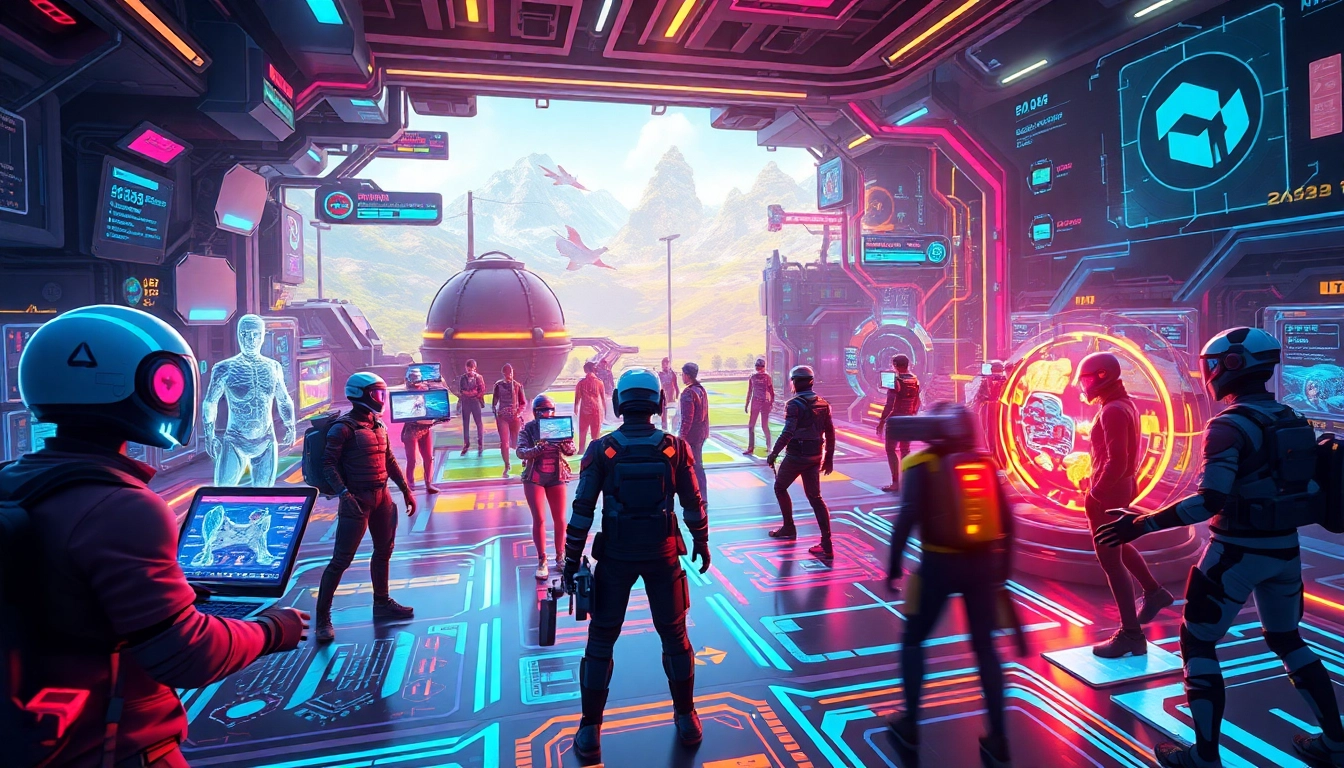
Understanding Game AI Fundamentals
Artificial intelligence (AI) in gaming has evolved significantly over the years, becoming an integral part of the gaming experience. Game AI refers to the computational systems that control non-player characters (NPCs) and facilitate dynamic gameplay, impacting everything from character behavior to environmental interactions. Understanding the nuances of AI can improve game design and player engagement, making it essential for developers to familiarize themselves with these concepts. As we delve deeper into game ai, we will explore its fundamentals, techniques, and the importance it holds in modern gaming.
What is Game AI?
Game AI encompasses a broad spectrum of techniques and technologies designed to create responsive, adaptive, and intelligent behaviors in video games. It is not merely about making NPCs react to player actions; it is about creating believable and engaging interactions that enhance the gaming experience. As players navigate a virtual world, effective game AI allows for realistic character movements and decision-making processes, reflecting choices that make sense within the game’s context. This can involve everything from simple scripted actions to complex systems driven by machine learning algorithms.
Types of Game AI: A Comparative Overview
Game AI can be categorized into several types, primarily based on the tasks they perform and the underlying technologies employed. The main categories include:
- Finite State Machines (FSM): A straightforward approach where NPCs can be in one state at any given time, resulting in predictable behaviors.
- Behavior Trees: A hierarchical structure that allows for more complex decision-making processes, enabling NPCs to behave in more realistic ways.
- Pathfinding Algorithms: Techniques that allow characters to navigate through the game environment efficiently, avoiding obstacles while pursuing targets.
- Machine Learning-Based AI: Systems that use data-driven techniques to learn from player interactions and improve responses over time.
Why Game AI Matters in Modern Gaming
The significance of AI in gaming cannot be overstated. It plays a critical role in enhancing the player's emotional connection to the game, contributing to realism and immersion. Well-implemented game AI can adapt to individual player behaviors, creating unique experiences for each session, which increases replayability. Furthermore, as the gaming industry continues to evolve, the demand for more sophisticated AI that can handle massive multiplayer environments and complex narratives is on the rise.
Core Techniques in Game AI Development
Developing effective game AI involves a mastery of various techniques and methods. Each technique has its strengths and weaknesses, and the choice of which to use can heavily influence the overall gaming experience.
Behavior Trees vs. Finite State Machines
Behavior trees and finite state machines (FSM) are two prevalent methods for designing AI behaviors. FSMs are simpler but can become cumbersome when managing complex behaviors, often leading to difficult-to-manage state transitions. In contrast, behavior trees offer a more modular and flexible approach, allowing for easier adjustments and enhancements to NPC behavior. Understanding the trade-offs between these two methods is crucial for developers aiming to create engaging AI-driven gameplay.
Machine Learning Applications in Game AI
Machine learning represents a revolutionary shift in the development of game AI. By utilizing algorithms that can learn from player data and optimize AI responses, developers can create dynamic characters and adaptive gameplay experiences. For example, reinforcement learning can be used to teach NPCs how to react to player strategies, making them more challenging opponents. This approach not only enriches the gameplay but also reduces the repetitive nature of AI interactions.
Procedural Generation and Content Creation
Procedural generation uses algorithms to create content dynamically, allowing for the development of expansive game worlds without manual input. This technique can also be applied to NPC behavior, where characters can have unique interactions based on their environments and history within the game. By integrating procedural generation into game AI, developers can enhance the storytelling aspect and provide players with a more personalized experience.
Implementing Effective Game AI Strategies
To harness the potential of game AI fully, developers must follow best practices while implementing AI strategies in their projects. This section explores actionable strategies for effectively integrating AI into gameplay.
Best Practices for NPC Behavior Design
When designing NPC behaviors, developers should prioritize believability and variability. Characters should respond to player actions in ways that make sense contextually, mirroring real-world reactions. Developers can implement layered responses, where NPCs exhibit different behaviors based on environmental cues, player actions, and their current states. This depth in NPC design not only enhances gameplay but also engages players on a deeper emotional level.
Testing and Refining Game AI Interactions
Regular testing is essential to ensure that AI interactions are functioning as intended. Conducting playtests can provide invaluable feedback on NPC behavior and overall game balance. Developers should monitor how players interact with AI, identify areas where NPCs may behave unexpectedly, and refine algorithms accordingly. Iterative testing and adjustment help develop a well-rounded AI experience that becomes more polished and enjoyable over time.
Measuring Success: Key Performance Indicators
Determining the success of game AI strategies involves defining and tracking specific key performance indicators (KPIs). Important KPIs for AI in gaming can include:
- Player engagement levels.
- Time spent interacting with AI characters.
- Player satisfaction ratings from feedback surveys.
- The number of player-NPC interactions that lead to meaningful outcomes.
By actively measuring these indicators, developers can make informed decisions on how to enhance AI systems, ensuring they meet player expectations.
Challenges and Solutions in Game AI
Despite the benefits of game AI, developers face multiple challenges that can hinder the development process. This section examines common obstacles and ways to overcome them.
Overcoming Common Misconceptions
One of the prevalent misconceptions about game AI is the belief that it can fully replace human creativity. While AI can enhance gameplay and design processes, it is not a substitute for human ingenuity. Developers should view AI as a tool that can augment their creative capabilities rather than replace them. Educating teams about the strengths and limitations of AI can help align expectations and foster effective collaboration between human designers and AI.
Addressing Ethical Challenges in Game AI
As AI technology advances, ethical concerns surrounding its implementation in gaming arise. Issues such as algorithmic bias and data privacy must be carefully managed to avoid negative impacts on players and society at large. Developers should adopt ethical guidelines that prioritize transparency and fairness in AI behavior, ensuring that AI-driven interactions uphold the integrity of the gaming experience.
Future-Proofing Your Game AI Solutions
Game AI is rapidly evolving, and developers must remain adaptable to new technologies and changing player expectations. By investing in scalable AI solutions that can be updated regularly, developers can ensure their games remain relevant and engaging. This might involve leveraging cloud services for AI processing or utilizing modular systems that allow for easy updates and enhancements.
Trends Shaping the Future of Game AI
The future of game AI is bright, with numerous trends poised to transform gameplay experiences. This section highlights emerging technologies and predictions for the coming years.
Emerging Technologies Impacting Game AI
The integration of technologies such as virtual reality (VR) and augmented reality (AR) presents new possibilities for game AI. These technologies require advanced AI systems capable of creating immersive experiences that respond to player movements and actions in real time. Additionally, advancements in natural language processing (NLP) are allowing for more sophisticated dialogue systems, enabling players to interact with NPCs in more meaningful ways.
Predictions for Game AI Beyond 2025
Looking ahead, it is anticipated that game AI will become increasingly personalized, utilizing player data to tailor experiences uniquely suited to individual preferences. As machine learning continues to progress, the ability for AI to predict player behavior and adapt accordingly will revolutionize gameplay, making each session feel fresh and engaging.
Case Studies of Innovative Game AI Implementations
Several recent games exemplify innovative implementations of game AI. For instance, *The Last of Us Part II* utilized advanced AI techniques to create realistic enemy behaviors, making encounters feel dynamic and unpredictable. Similarly, games like *Middle-earth: Shadow of Mordor* showcased the potential of AI-driven nemesis systems that adapt based on player actions, emphasizing the importance of AI in crafting unique narratives that resonate with players.
In conclusion, mastering game ai is crucial for any developer aiming to create engaging and immersive gaming experiences. By understanding the fundamentals, leveraging core techniques, and adapting to emerging trends, developers can harness the power of AI to continue pushing the boundaries of what is possible in game design. The journey to advanced game AI is ongoing, but with dedication and innovation, the future of gaming looks promising.